Catholic Schools: Fostering Catholic Identity in a Pluralistic Community
Here is a link to this weekend’s readings.
 As we begin Catholic Schools Week, I’d like to focus on an issue that relates to the larger question of ecumenism we have been exploring. One of the big questions today in Catholic Education is how to foster a Catholic identity when the population of students is often no longer homogenously Catholic. A tribute to the good work of our parish, diocesan, and religious schools is the interest in them from non-Catholics. For some, the Catholic schools are valued for their excellence in academics and their proven track record of preparing students for college and work. For others, the ethics and discipline are attractive, including the focus on the common good and service to those in need. For still others, the holistic approach to education is important, recognizing the student as more than just a mind, but also a person who is body and soul. Whatever the reasons, Catholic schools are not just attended by Catholic students, and so the question of supporting Catholic identity is central.
Another way of posing this same question might be: what elements of Catholic identity are especially suited for 1) fostering a healthy sense of belonging and commitment in those students who are already Catholic, and 2) presenting the Church in its best light and thus being inviting and welcoming to those who are not Catholic? The answers we find to this bi-focal question get us right to the heart of both the New Evangelization and the call of Pope Francis to be “missionary disciples” living a “culture of encounter” (Evangelii Gaudium/The Joy of the Gospel, 119-121, 220).
What do you think nurtures Catholic identity? Did you attend a Catholic school? What aspects of the school drew you closer to the heart of the Church? If you were administering a Catholic school, what would be your highest hopes in regards to Catholic identity for both the Catholic students and the non-Catholics in the school community?
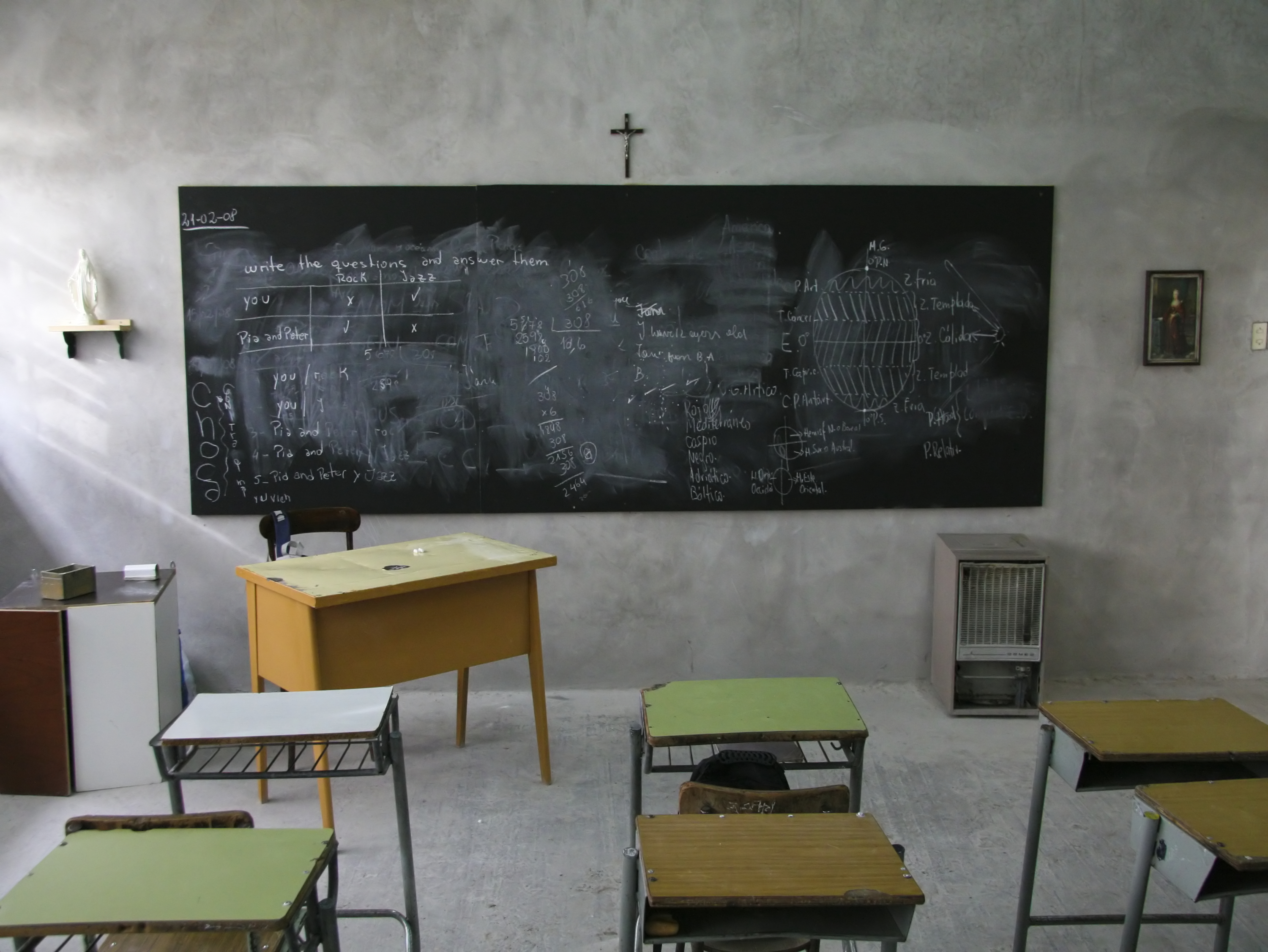
Starting from the negative end, the Catholic School should not hide its identity nor should it promote a chauvinistic kind of pride. In most circumstances, the normal symbols and practices associated with Catholicism are entirely appropriate, for example: crucifixes, statues, and other religious art; prayer and Eucharistic celebrations; retreats and mission trips. What would be wonderful, though, is to recognize the community of students and to find art and prayers that celebrate our unity and diversity. Are there Jewish students in the school? Highlight Pope Saint John Paul II’s visit to the Western Wall and the words of brother- and sisterhood he employed in his close relationship with Jews. Study the documents of the Jewish-Catholic dialogue, beginning with Nostra Aetate.

Pope Francis visiting the Temple Mount and meeting the Muslim clerics and Catholic cardinals. May 26, 2014.
Are there Muslim students? Imagine artwork of Saint Francis meeting with the Sultan of Egypt during the Crusades. Envision photographs of John Paul II and Pope Francis each visiting a mosque. Consider how meaningful it would be to all students to study the words of the Catholic-Muslim dialogue, again beginning with Nostra Aetate and leading up to Pope Francis saying, “Christians and Muslims are brothers and sisters” and washing the feet of Muslims.
In many cases, the students may be Protestant Christians of various denominations. The approach is the same. How can we delve into the treasure chest of our own rich, 2000-year tradition to nurture Christian unity rather than proselytizing and drawing hard lines of division? In their document on ecumenism, Unitatis Redintegratio (1964), the bishops at Vatican II said that the first task of the ecumenical movement was to use “every effort to avoid expressions, judgments and actions which are not truthful and fair… and [that] make mutual relations…more difficult” [UR #4]. The Catholic school, it seems to me, is a privileged locus for this pursuit of truth and dismantling of prejudice.
According to Pope Francis, as he joins in the 500th anniversary commemorations of the Protestant Reformation, “We have the opportunity to mend a critical moment of our history by moving beyond the controversies and disagreements that have often prevented us from understanding one another” and “We too must look with love and honesty at our past, recognizing error and seeking forgiveness, for God alone is our judge.” Such critical reflection and work towards reconciliation on all sides is certainly appropriate to a Catholic education.
With what is happening in the United States right now, the words of the Joint Declaration of Lutherans and Catholics for the 500th anniversary of the Reformation are especially pertinent: “We urge Lutherans and Catholics to work together to welcome the stranger, to come to the aid of those forced to flee because of war and persecution, and to defend the rights of refugees and those who seek asylum.” The Beatitudes remind us in today’s liturgy, “Blessed are they who hunger and thirst for righteousness, for they will be satisfied. Blessed are the merciful, for they will be  shown mercy.” The reading from Zephaniah assures us that “The LORD keeps faith forever, secures justice for the oppressed, gives food to the hungry…. The LORD loves the just; the LORD protects strangers.” Continuing to promote these Scriptural values is among the prime ways the Catholic School maintains its unique identity in our culture while building bridges with those of other faiths and of no faith.
What is the Catholic identity we want to radiate from our schools? Surely it is deeper than just having crucifixes in every classroom. To reach the hearts of our students, we should meet them in the place they consider important: a place of nonjudgment and acceptance. If we can demonstrate that this is also a rich part of our tradition, rooted in Christ Himself—without needing to resort to relativism or indifferentism—then we will present the Church in its best light and help foster belonging and commitment.
Editorial credit: Roman Yanushevsky / Shutterstock, Inc. for the Pope Francis photo.