Peace and the Unity of All Christians
Here is a link to today’s readings.

Westminster Abbey, London
I wonder if you have a story similar to this: when my parents went on their honeymoon, they traveled to London, but they didn’t visit Westminster Abbey because it was a Protestant church and, under pain of sin, they had to avoid any “cooperation with the evil of Protestant heresy and schism.” Faithful Catholics protected the True Faith by eschewing all things Protestant. Does this sound familiar to you?
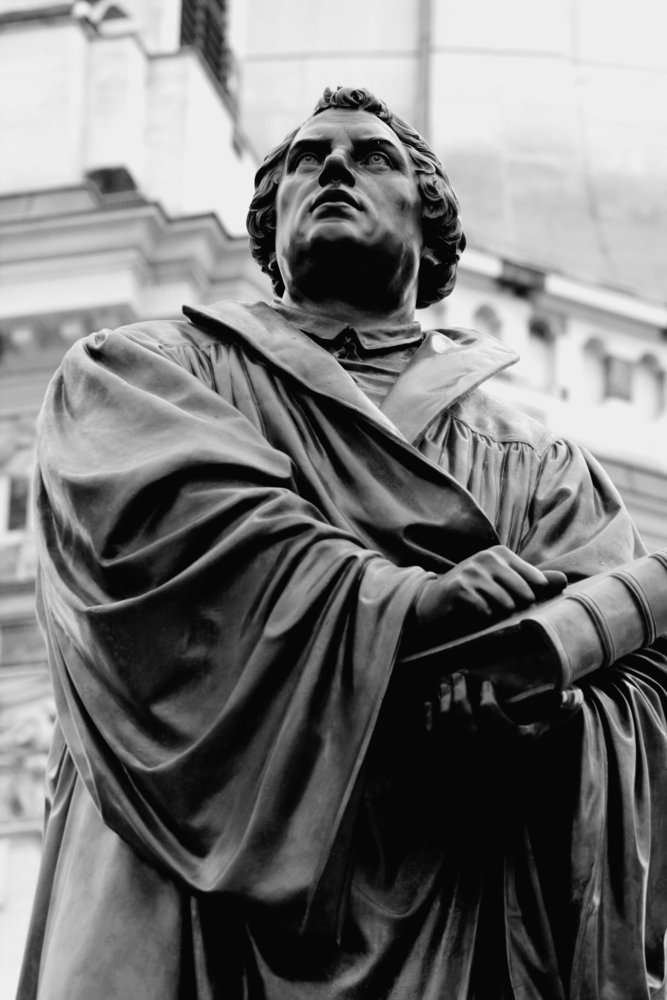
Today is the World Day of Peace. In our first reading, we hear the ancient blessing, “The LORD look upon you kindly and give you peace!” In a week and a half, we will enter the annual Week of Prayer for Christian Unity. It is especially poignant this year as 2017 marks the 500th anniversary of the Protestant Reformation. So much violence in those 500 years!… violence that helped nurture the seeds of secularism that affects us today. When Martin Luther nailed his 95 Theses to the Castle Church door on October 31, 1517, he had no intention of dividing the Church and instigating religious wars. His initial effort was aimed at reforming the Church from within. Then, as now, there were abuses that demanded reform. Centuries earlier, St. Augustine had reminded us that the Church is semper reformanda, meaning always in need of reform.
The attitude towards Protestant Christians that my parents grew up with was certainly in need of reform. In the 1960’s, at the largest gathering of bishops the Church has ever known—the Second Vatican Council—the Catholic Church took a decidedly new approach towards our Protestant brothers and sisters. The ecumenical movement was endorsed by the bishops not as an apologetic tool for the “ecumenism of return,” but as a genuine gesture of love for our “separated brethren.” As we begin this 500th anniversary year, let’s take a new look at the words of the Council.
 In their Decree on Ecumenism (Unitatis Redintegratio, 21 November 1964), the bishops asserted that “The restoration of unity among all Christians is one of the principal concerns of the Second Vatican Council” (UR 1). This, of course, follows Jesus’ own prayer that “they may all be one… that the world may believe that you [Father] sent me… and that you loved them even as you loved me” (John 17:21-23). Thus, acknowledging that “division openly contradicts the will of Christ,” the bishops worried that it also “scandalizes the world, and damages the sacred cause of preaching the Gospel to every creature” (UR 1). We cannot deny that over a half century later, the divisions among Christians—including divisions among Catholics themselves—are a form of what Pope Paul VI called “counter-evangelization.” St. Paul encountered this even in the early Church:
“Now I appeal to you, brothers and sisters, by the name of our Lord Jesus Christ, that all of you be in agreement and that there be no divisions among you, but that you be united in the same mind and the same purpose. For it has been reported to me by Chloe’s people that there are quarrels among you, my brothers and sisters. What I mean is that each of you says, ‘I belong to Paul,’ or ‘I belong to Apollos,’ or ‘I belong to Cephas,’ or ‘I belong to Christ.’ Has Christ been divided?” (1 Corinthians 1:10-13). Maybe we should ask ourselves: Do we also make such claims? Do we say implicitly, “I belong to Pope Francis” while others say, “I liked Pope John Paul II or I follow Cardinal Burke” and still others claim, “I follow Luther” or “I belong to the Archbishop of Canterbury”? The Word of God, spoken to us through St. Paul, is a clear and living Word: we are all followers of Christ! Ever reforming the Church from its human defects, we are called anew to “live in a manner worthy of the call you have received, with all humility and gentleness, with patience, bearing with one another through love, striving to preserve the unity of the spirit through the bond of peace: one body and one Spirit, as you were also called to the one hope of your call; one Lord, one faith, one baptism; one God and Father of all…” (Ephesians 4:1-6).

Martin Luther monument in Dresden, Germany
We are now 50 years beyond the Council and 500 years past the Reformation, yet the bishops’ words seem fresh: “In recent times, God has begun to bestow more generously upon divided Christians remorse over their divisions and longing for unity” (UR 1). We long, “almost everyone, though in different ways… for the one visible church of God, a church truly universal and sent forth to the whole world that the world may be converted to the Gospel” (UR 1). Is this your own longing? What have your experiences been around division in the Church and around the ecumenical movement? As we commemorate the 500th anniversary of the Reformation, is there anything you plan to do to help the Church in its efforts to always be reforming itself and to work towards Christian unity?
Periodically throughout the year, I will continue to explore this topic, bringing the words of Vatican II into a fresh dialogue with the current situation. I hope you’ll join me in making 2017 a year not just to look back at a moment of division, but to look ahead towards greater unity and peace. As we prayed in the responsorial Psalm today: “May God bless us in his mercy!”
- Editorial Credit: Olga Popova / Shutterstock.com for the Pope Paul VI stamp.