Praying in and for a Dark World
Here is a link to today’s readings.
 Some days you just want to give up and run away. As I’m typing this, my mood and morale are hovering just above zero. My early morning college class bombed, I’m coming down with a cold, and I just don’t seem to be able to get through the work piling up on my desk. I dream of escaping to Tahiti with a one-way ticket and only a backpack full of beach gear.
The usual cure for self-pity is to turn our gaze outwards and recognize how fortunate we are. Count your blessings, as the saying goes! This time, though, I’m looking out at the world and feeling depressed, not blessed. The violence in Iraq and Syria is heartbreaking. The continued atrocities of ISIS are demonic. The election politics in the U.S. are full of vitriol and divisiveness. Whatever your opinion of Black Lives Matter, the exposure of deep-rooted racism existing still in American society is depressing. Also depressing is the report on climate change concerning carbon in the atmosphere at the highest level ever and another report that 92% of the world’s population is breathing polluted air. Add to this the murder of priests in France and Mexico (now declared the most dangerous country to be a priest), the murder of two nuns in Mississippi, and the kidnapping and rape of a nun in Bolivia, and it’s hard to find the rose-colored glasses.
Today’s first reading, the opening words from the prophet Habakkuk, captures the mood perfectly: “How long, O LORD? I cry for help but you do not listen! I cry out to you, “Violence!” but you do not intervene. Why do you let me see ruin; why must I look at misery? Destruction and violence are before me; there is strife, and clamorous discord.”
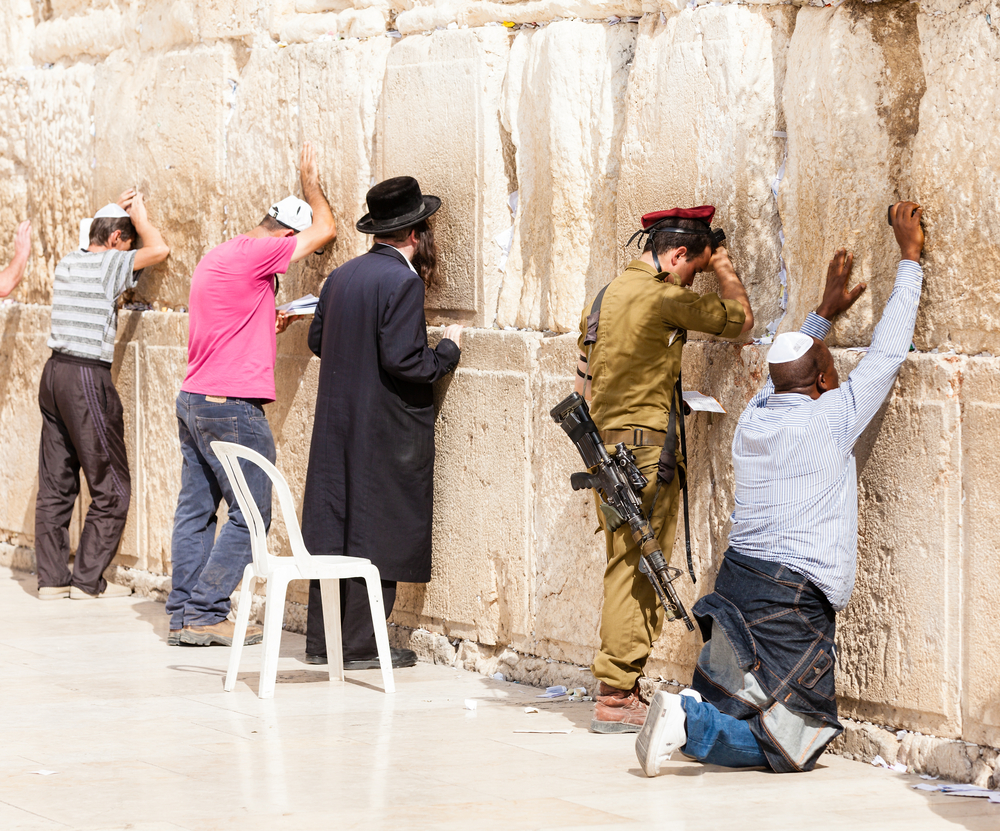
 The Jewish tradition of the lamentation, evidenced even today at the Wailing Wall, is an important part of our spiritual heritage. Lamentations—those cries to God expressing deep sorrow and misery—help us in at least three ways. First, they turn us to God in the midst of suffering. Like Habakkuk, and like Christ on the Cross, we agonize, even feeling completely forsaken by God at times; but rather than allow that pain to drive a wedge between us and God, we turn it into a spiritual instrument. Like the slaves singing their Gospel songs, hoping and longing for freedom, we turn our sorrow into song, our pain into prayer. Like Job, we complain about injustice and suffering directly to God, who credited Job for having “spoken rightly” (Job 42:7).
Second, by honestly acknowledging our inability to fix the world, we implicitly reject the temptation to Pelagianism. Christians, indeed, must work for justice and peace, but we may also be tempted to think we can fix everything if we just vote correctly, come up with the perfect plan, organize and get the right people into positions of power, and build intelligent institutions and systems. The fact is, “Unless the Lord build the house, they labor in vain who build” (Psalm 127:1). We cannot earn our salvation nor “build the City of God,” as the hymn suggests. Salvation and the Reign of God are both gifts. As St. Thérèse wisely noted, it is all grace. We realize, as Jesus taught us in today’s Gospel, that everything we do, in the end, is done as “…unprofitable servants… [who] have done what we were obliged to do.” We must work to alleviate suffering and bring justice; but, as Tom Groome likes to say, we should all have a bit of John the Baptist in us as well, reminding ourselves with him, “I am not the Messiah” (John 1:20).
 Finally, by turning to God in lamentation, we find hope in the midst of a tragic world. Pope Francis reflected on this theme recently, saying, “Spiritual desolation makes us feel as though our souls are crushed, we can’t succeed, we can’t succeed and we also don’t want to live: ‘Death is better!’ This was Job’s outburst. It was better to die than live like this. We need to understand that when our soul is in this state of generalized sadness we can barely breathe: This happens to all of us… whether strong or not ….. to all of us.” He then tells us that the solution is not to be found in pills or alcohol (or even in escaping to Tahiti!) but in prayer. Turning to God, we find hope, because, as the reading from Habakkuk reminds us, “the vision still has its time, presses on to fulfillment, and will not disappoint; if it delays, wait for it, it will surely come, it will not be late.” And so we pray, Thy Kingdom Come! My Jesus, I trust in You!
- Editorial Credit: Alexey Stiop / Shutterstock.com for the Wailing Wall photo.
- Editorial Credit: kafeinkolik / Shutterstock.com for the Syrian refugee children from Aleppo photo.